Lor'themar vs. the Amani - 'The Bitter Truth' Short Story Analysis
Meeting in Harandar
Prior to the events of this short story, a few key events happen during patch 12.0.7. After being invited to Harandar by Elder Hagar, the elf and troll leaders of Azeroth all bore witness to a revelation: they are all related to each other through ancient ancestry.
While the details of that ancestry may be slightly muddy, the reaction from leaders of all kinds was almost unanimously negative. Lor'themar in particular was particularly aggrieved by this news, frustrated at the prospect of putting aside his hatred for the Amani in the name of peace.
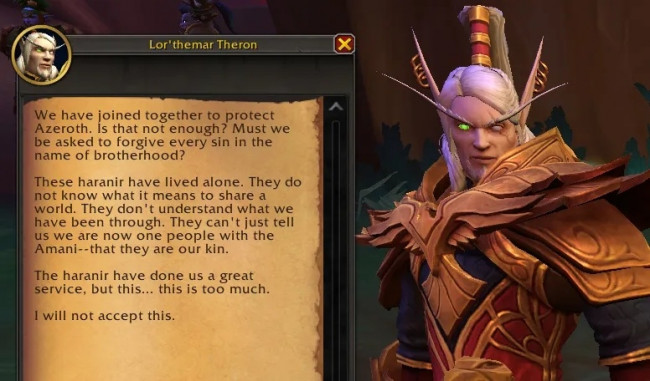
In the wake of the gathering, Lor'themar is invited by Lady Liadrin to one of the haranir's nearby lodges for a drink. In truth, however, Liadrin had invited him not to meet her, but to meet another of the Amani leaders who had been invited: Torundo the Grizzled. While he is a familiar face to players, having appeared a number of times in Zul'Aman's main story and side quests, his face is new to Lor'themar... or perhaps not, if his suspicions prove true.
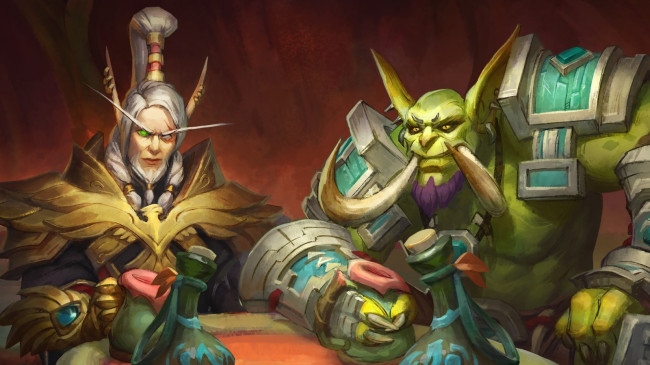
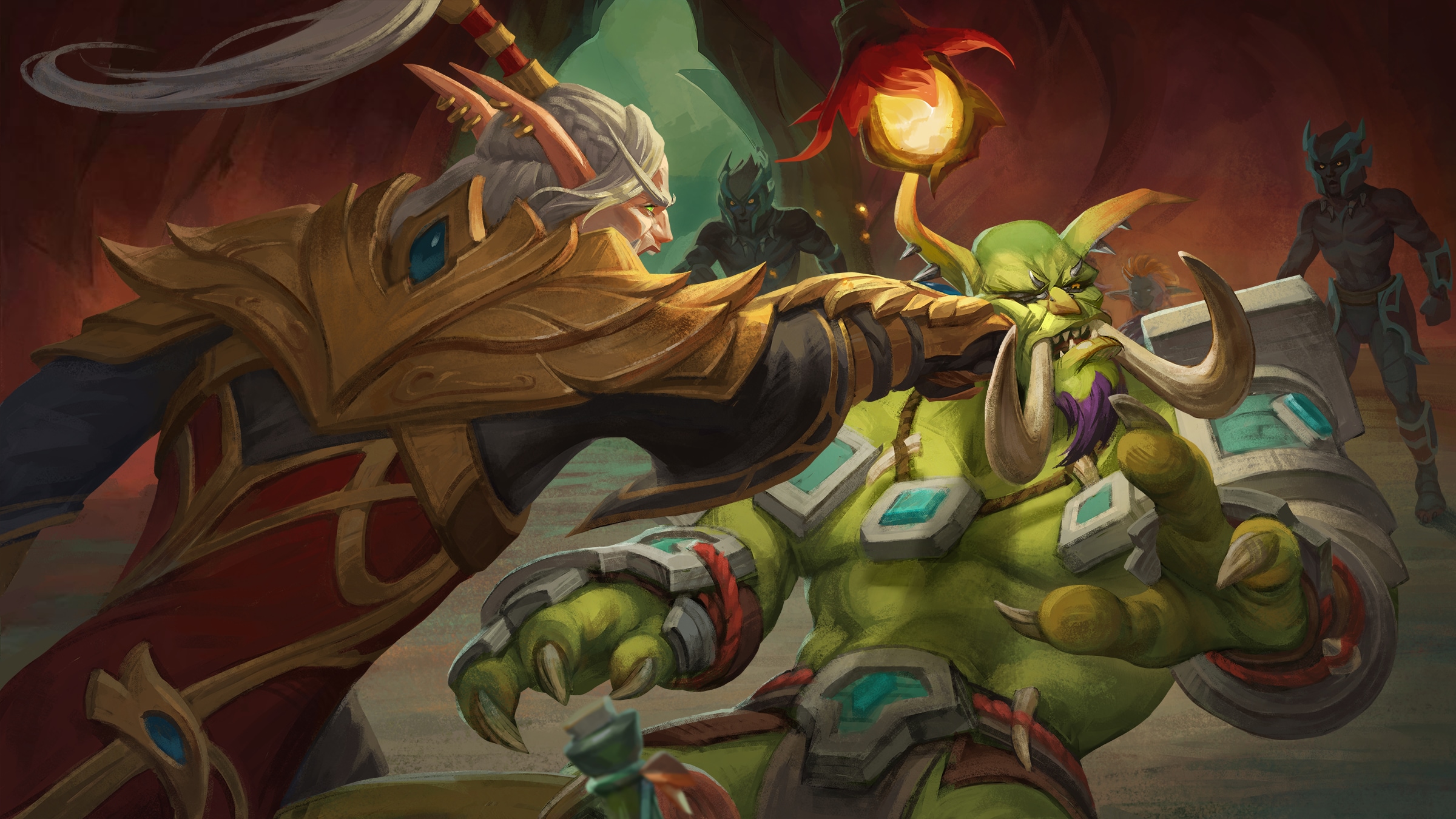
With bloodshed forbidden on haranir grounds, Lor'themar and Torundo are forced to talk rather than fight, an unusual prospect for both races and both men. Rather than battling with blades, they battle with wits and will, challenging the other to consume the 'acquired taste' of the haranir beverages. After brief introductions and a toast to Liadrin's deception, Lor'themar seems certain he has met Torundo before.
Rather than answer, Torundo instead discusses Liadrin, and the diplomacy she has been establishing between elves and trolls thanks to her friendship with Zul'jarra. Despite her past — parents murdered by the Amani, and torture at the hands of their former leader Zul'jin — she found it within herself to understand the difference between Zul'jin and the rest of his people, including his granddaughter. Over the course of Zul'Aman's leveling story, Liadrin went from a tense alliance with Zul'jarra to her genuine advisor, and seemingly now seeks to share that understanding with the rest of her people.
A Past Encounter
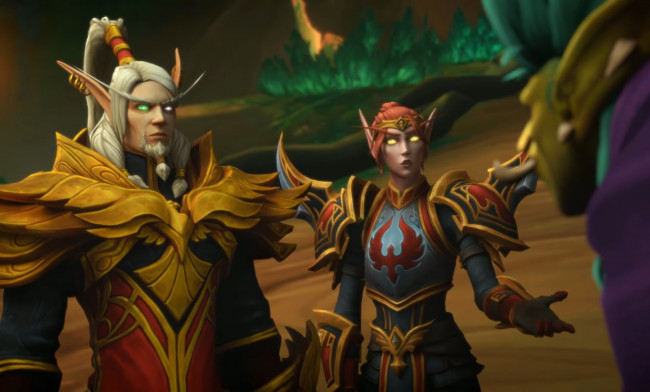
Neither Torundo nor Lor'themar seem to share that understanding, at least not in the early moments of their talk. Instead, they both find ways to compliment the others' people in backhanded ways. While Lor'themar sees Zul'jan's reaction to Hagar's revelation as a childish tantrum, Torundo sees it as understandable anger, in contrast to the cowardice that the elves hide behind 'dignity'.
"I have always admired one thing about your people: the endless ability to lie to yourselves. The blood all washed from your hands, the dirt scraped from your fingernails, the streets swept fresh before you head off to your banquets and functions." Torundo smiled while making those words sound like curses. "Bunch of clean people standing around, pretending they were never dirty. Calling themselves dignified. Flimsy masks, and so difficult to wear."
"Oh. You sound envious." Lor'themar enunciated each syllable with precision. "Tell me, will it trouble you when Zul'jarra has you commit some new atrocity? She must have learned well from her grandfather. It's been too long since I've seen Amani raiding parties pose dead innocents in creative ways. Perhaps she will turn to the old, familiar style: summoning some ancient problem that my people must lay to rest once again." Lor'themar put a touch of pity into his voice. "Or perhaps she will find a new approach to teach me her perspective on dignity."
Their discussion on the dignified nature of elves leads Torundo to discuss the wounds inflicted upon Zul'jin by the high elves, and the repayment that he had gifted to the high elves in turn — to Lor'themar in particular. In that moment, Torundo reveals how they had met: he had been present when Zul'jin tortured Lor'themar, Liadrin, and their high elf allies.
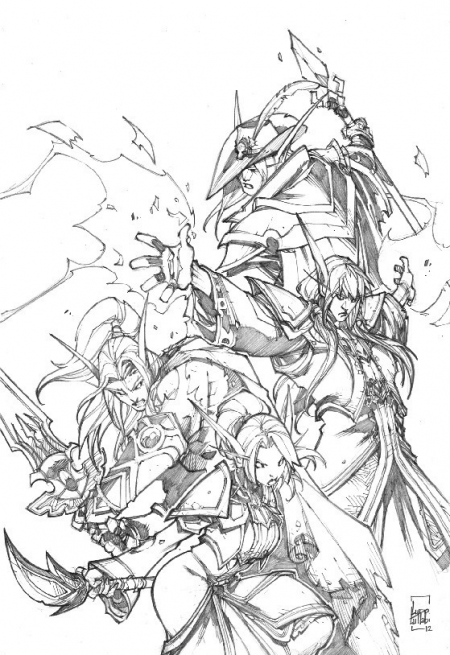
A young Lor'themar and Liadrin in the bottom left.
Lor'themar had not truly met Torundo many years prior when the elderly troll general had still been a boy, but the features he recognized on Torundo's face were those of his uncle. Lor'themar had taken part in a raid on Torundo's home village of Zen'tamani under the command of Lireesa Windrunner, the mother of the Windrunner sisters and Ranger-General at the time.
In response to a brutal troll attack on high elf civilians — as well as to critique that she was too soft on the Amani — Lireesa had led the attack in the night on the sleeping, drunken raiding party that had killed the elves... and after they had been captured, she led her Farstriders into Zen'tamani and slaughtered every troll they could find as repayment for harboring those who butchered elven civilians.
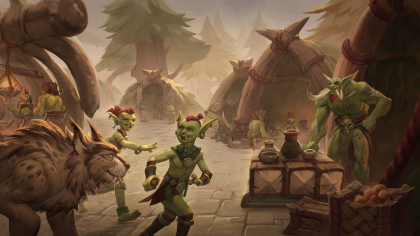
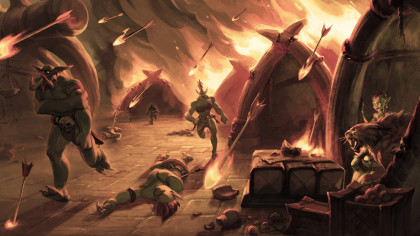
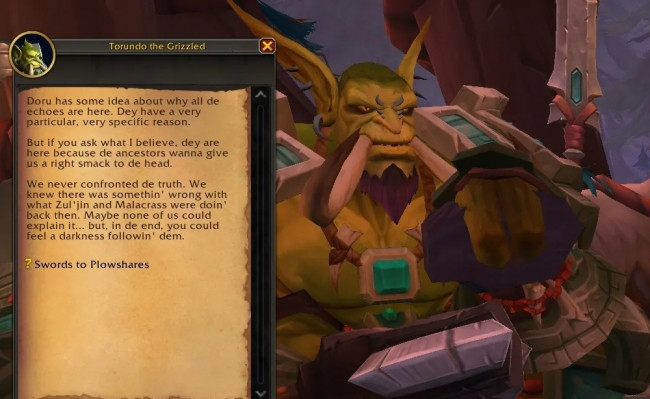
In response to their village being razed, the surviving Amani civilians fled to Amani'Zar within Zul'Aman's walls and pledged themselves to Zul'jin's cause of repaying their losses in blood. Torundo had been among those survivors, and that traumatic incident as a child had been his reason for entering the cycle of violence between elves and trolls that continues to this day.
The History of Elves vs Trolls
While Lor'themar and Torundo both comment on the conflict between their people coming to an end, the bloodshed inflicted back and forth is still fresh in their minds as they converse in Harandar. To understand the broader nature of the conflict surrounding Torundo and Lor'themar, our story has to go back over 7,000 years, long before any living Amani troll or blood elf had been around.
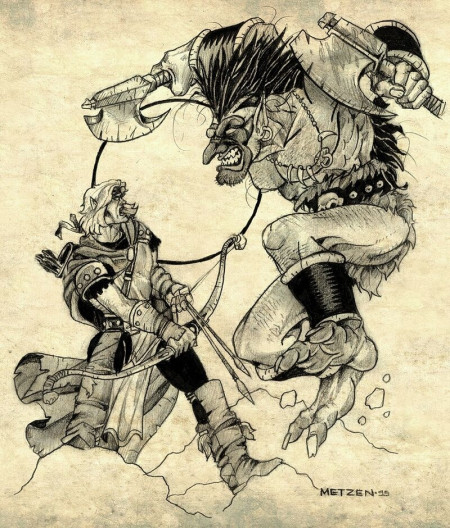
Chris Metzen's classic High Elf vs Troll artwork.
After being exiled from Kalimdor for refusing to give up their use of arcane magic, the Highborne night elves sailed east, where they landed on the shores of Lordaeron. After discovering a dark presence there that disturbed their minds, they chose to venture north in search of lands to settle with powerful magical leylines, and along the way transformed into high elves thanks to the distance from their font of power in Kalimdor.
While the high elves eventually did found the nation of Quel'thalas around their newly birthed Sunwell, they first encountered the Amani forest trolls along the way, whose lands they were stealing and desecrating to create their new nation. Elves and trolls battled fiercely back and forth, but the elves ultimately succeeded in using their immense arcane power to force the Amani from their lands and establish what we now know as Eversong Woods.
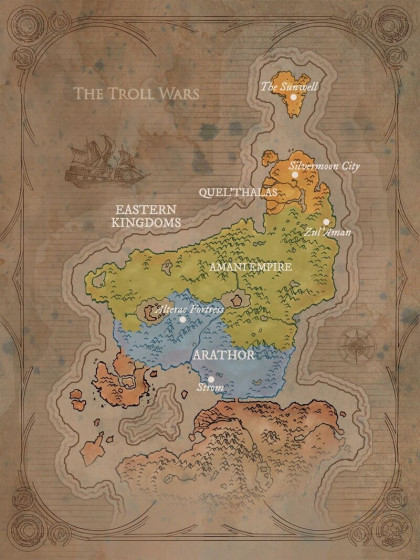
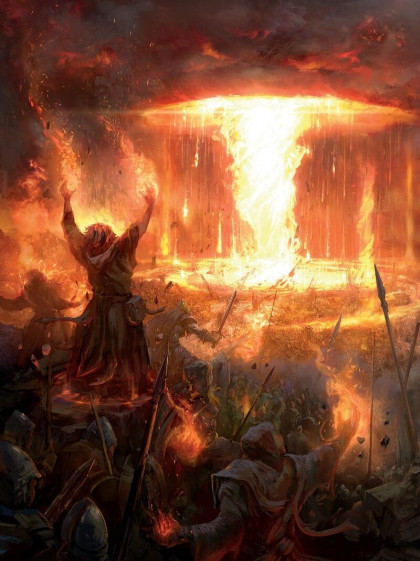
In the following millennia, the Amani and high elves continued to fight over their borders, trading atrocities and attacks back and forth but ultimately never changing the status quo. It wasn't until the arrival of emissaries from the distant Zandalari Empire arrived that the Amani saw a chance to take their land back for themselves, and initiated the conflict known as the Troll Wars. Unfortunately for the Amani, the high elves allied with the neighboring human tribes to fight back, dealing devastating blows to the Amani's numbers and forcing them even further out of their lands, establishing the border at Atal'Aman that we know today.
In more recent years, during the decades prior to the opening of the Dark Portal, the Amani had come to be led by Warlord Zul'jin, who gradually rallied their scattered tribes into a united force. He promised them not only vengeance on the elves for the land they stole, but for the loved ones they had taken from the Amani in the process as well. Torundo had been one such troll, driven out of his village by the likes of Lireesa and Lor'themar, and eventually rose to the rank of General in pursuit of vengeance.
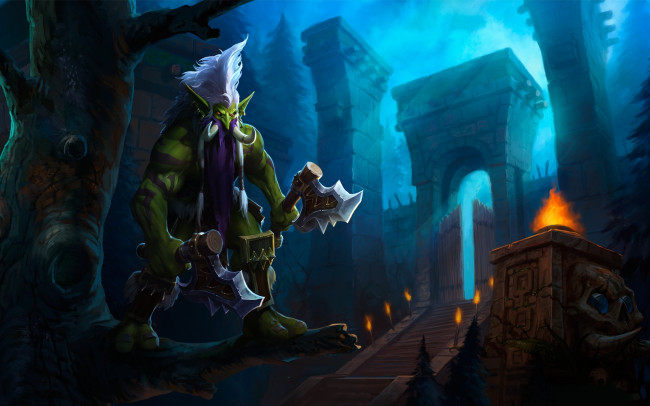
In an attempt to discover the secrets behind the elven runestones that protected Quel'thalas, Zul'jin kidnapped a number of magisters and rangers, including characters like Liadrin, Lor'themar, and Dar'Khan Drathir, the elf who would one day cause the true downfall of Silvermoon. When the elves refused to give up their secrets, Zul'jin and his trolls brutally tortured them, painting their faces with their own blood and scarring them with memories they would never forget — and never forgive, in Lor'themar's case.
Zul'jin suffered in turn for his actions during the events of the Second War, where his alliance with Orgrim Doomhammer and the Orcish Horde ended in catastrophic failure. Captured by the elves after their failed attempt to destroy Silvermoon, Zul'jin lost an eye to their torture, and in his efforts to escape captivity, he was forced to cut off his own arm as well. His survival only emboldened him as leader of the Amani, and he continued to rally survivors of elven violence with the promise of vengeance.
His final attempt to conquer Silvermoon would ultimately come during The Burning Crusade, where he worked with Hex Lord Malacrass to enslave the powers of their loa into troll avatars. Torundo was among the soldiers who served Zul'jin during this time, and while he had never protested, he knew in his heart that their betrayal of the loa for the sake of vengeance was a step too far. In the end, Zul'jin's attempt was halted before it could even begin, when players assaulted Zul'Aman and killed both him and his loa avatars, leading us to the loa-bereft Amani that we saw during Midnight.
Perhaps the most important note throughout all of this history is just how far back it stretches. Even by elven standards, 7,000 years is an enormous length of time, and almost no living blood elves were around for the initial conflict with the trolls, let alone any who actively partook. For the Amani, the difference is even more obvious with their average lifespans, and their connection to both the origins of their conflict and the Troll Wars are a generational history, not a personal memory.
Which brings up the question: whether the conflict started with hostile trolls, elven colonization, or any other manner of event, how do those events matter to those in the present day? Are they the cause for Torundo's village being destroyed? Are they the cause for the brutal civilian deaths at the hands of the Amani that preceded its destruction?
The Truth of Torundo's Past
That question brings us back to the present in our short story, where the heated debate over the conflict escalates until Lor'themar defies the Haranir's rules against violence and punches Torundo across his face. Despite the act of violence, Torundo takes it on the chin (literally) and tells the Haranir to excuse the outburst.
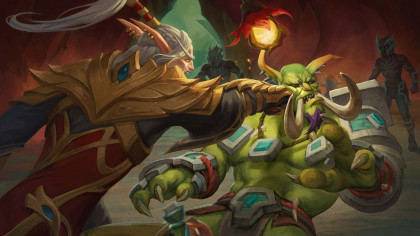
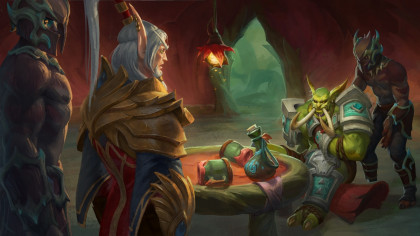
Even though he flagrantly broke the Haranir's rules, Lor'themar does not regret his actions, save for the virtue of civility it cost him. Torundo claims that to be yet another lie that Lor'themar tells himself, just like the lies about the attack on Zen'tamani Village. Rather than continue the battle of words, Lor'themar endeavors to ask Torundo to tell him the truth — his version of the truth, at least — of that day.
According to Torundo, the Amani warriors had not attacked civilians intentionally, but by accident thanks to a false flag maneuver by the Farstriders. By hiding weapons among a civilian caravan and using them as living shields to disguise themselves within, the Farstriders tricked the Amani warriors of Zen'tamani Village into attacking the caravan and slaughtering civilians and Farstriders alike. In truth, the reason the raiding party had been drunk and so easy to capture had been because they wanted to wash the horrors of the Farstrider trick from their minds.
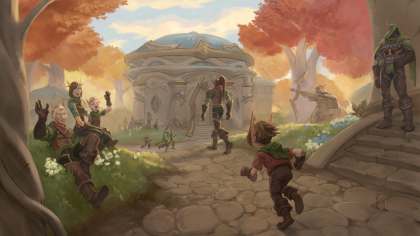
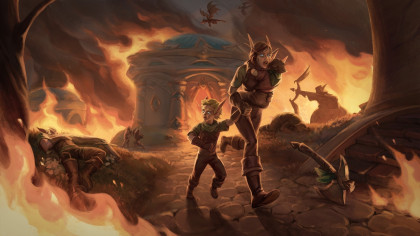
The resulting slaughter of Zen'tamani Village had been equal action in the eyes of the elven public, a just retaliation for the slaughter of their own civilians. Yet just as Lireesa Windrunner had used the attacks to justify her position and rally against the Amani, Zul'jin had rallied the Amani tribes to his side with the very same reasoning: matching escalation with escalation. That very attack had led to another slaughter — and the cycle continued.