BlizzCon Day 2 Roundup: Forever, Forever, and More Forever!

Classic+ Coverage Continued
Today's focus was less on Retail announcements and more on the world of Forever. From a deep dive first thing in the morning, to a technically impressive display by MSI showcasing graphical updates, to explanations of game design philosophy on how Blizzard wants the world of Forever to truly feel, these teasers gave us enough to think about that we can't wait for the beta to start in a few short days.
BlizzCon has ended, and it's always sad to say goodbye to the friends we meet on these weekends. Those friendships stick around, though, just like all the information we've gotten about upcoming Blizzard reveals, releases, and projects!
Today was a day with significantly fewer big reveals — instead, panels focused on behind-the-scenes information to give us more insight on how things are made, what's up next for some IPs, and even more information on Classic+. We've had tons of liveblogs, coverage, and great Blizzard surprises, but BlizzCon has too much information for everyone to know everything. We're rounding up the info about what you might've missed while you're at the con, or at home enjoying things virtually!
Forever Deep Dive Panel Recap
There's still more adventure waiting in the world where it all began. During the World of Warcraft: Forever Deep Dive, Associate Production Director Clay Stone, Senior Game Designer Josh Greenfield, Lead Software Engineer Ana Resendez, and Principal Game Designer Kris Zierhut shared how this full new World of Warcraft game set in a reimagined original Azeroth is being shaped around the moments that make the world feel alive.
Building Deeper into Azeroth
World of Warcraft: Forever begins with a familiar promise: Azeroth is still a place worth getting lost in. Here, Azeroth is the main character, and every road, campfire, dungeon, and familiar name along the way is part of the story. A core foundation of World of Warcraft: Forever is serendipitous interactions: the kind of chance encounters that can turn another player on the road from competition for an herb node, mining node, or enemy tag into someone worth stopping for.
Camping builds on that foundation by reimagining the simple Cooking Fire as a Basic Campfire, creating campsites where players can rest, sit for a moment, gain useful benefits, and contribute crafted objects that make a roadside meeting feel useful, social, and worth remembering. That promise carries through the everyday parts of the adventure, from stopping at a campfire in the wild to leveling another character, finding value in professions, choosing how and where to play, and recognizing familiar names out in the world.
Systems That Bring Azeroth to Life
Several systems come into focus in World of Warcraft: Forever, beginning with Camping. The system expands the simple Cooking Fire from the Cooking profession into a Basic Campfire, giving players a reason to pause together in the world before heading back into adventure. Professions are also gaining more depth, with over 600 new recipes across professions and level ranges, adjusted crafted food that can grant a small experience bonus and stat boosts, and advanced Blueprint recipes from dungeon bosses.
Camping and Professions
The Basic Campfire turns those roadside pauses into something players can build together. Placing a campfire creates a campsite where players can rest and gain access to useful benefits such as vendors, repairs, profession workspaces, and one-hour buffs. To gain those buffs, players will need to slow down, sit by the campfire for a few moments, and get rested before heading back into adventure. It is also a natural place to refresh food buffs, which have received a major update in World of Warcraft: Forever.
Choose your campsite carefully, though — some parts of Azeroth are better suited for a quiet rest than others.
A Basic Campfire allows up to three special crafted objects to be added by nearby players. Each player can contribute one object, and those objects share a one-hour cooldown. Every profession has three different objects learned at different skill levels, and each profession provides its own buff or utility no matter which object is placed.
Blacksmiths, for example, can place a Sharpening Wheel that increases Attack Power, Tailors can place a Faction Banner that increases Spirit, and Herbalists can place an Incense Candle that increases Intellect. These effects are variants of, and do not stack with, buffs normally provided by specific classes.
The first campsite objects are learned once a profession reaches skill level 20, either from special nonplayer characters (NPCs) who introduce players to camping or from profession trainers, while more advanced objects come from Blueprint recipes that drop from specific dungeon bosses.
Alchemists can learn to place an Alchemy Lab, Leatherworkers can place a Tanning Rack required for more advanced Leatherworking recipes, and Cooks can learn upgraded Campfires that allow five or 10 objects to be placed at a camp. Together, these additions give professions more depth, purpose, and visibility throughout the world.
The Legacy System: Rewarding Every Journey
The Legacy System grew out of one of the team's favorite parts of Hardcore: seeing so many players constantly leveling and making the world feel active, lively, and full of possibility. For World of Warcraft: Forever, the team wanted to capture more of that energy in a way that rewards players for beginning the journey again without asking them to face Hardcore's deadly consequences. The result is a system designed to make leveling alternate characters (alts) more exciting, emphasize the journey over the destination, and give players new challenges that reward progress across all their characters.
Players earn Legacy Points by completing Legacy Challenges across several categories, with examples including leveling a specific class or reaching a particular skill milestone. These challenges are not meant to force players into strange tasks disconnected from the game. Instead, they are designed to complement the existing journey, reward the ways players already enjoy adventuring through Azeroth, and add new goals that make each repeat journey feel more meaningful.
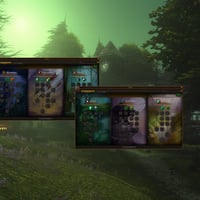
Legacy Points can be spent in Legacy Trees, beginning with Professions, Adventure, and Resourcefulness. As players earn points, they can shape each character's path through these trees based on the playstyle that fits that character best.
- In the Adventure tree, players can find the "Well Rested" talent to increase rested experience gains and raise the rested experience cap, making it especially useful for leveling alts.
- In Professions, players can find the legacy talent "Bountiful Harvest" to increase the materials gathered from mining, herbalism, or skinning.
- Deeper in Resourcefulness, powerful perks such as Reagent Economy can remove reagent requirements from class abilities, making buffing easier while still asking players to make meaningful choices about where to spend their limited points.
What makes the system especially flexible is that Legacy Points are shared across all alts, while each character spends those points separately in their own trees. Players who want to create many alts can earn points across a wider selection of legacy challenges, taking on new goals such as leveling a different class, while players who want to focus on maximizing a particular character can dive deeper into the categories and complete more complex challenges. Players can also do both, engaging with the system in the way that feels best for their journey through Azeroth.
At launch, each character can spend up to 16 points in their Legacy Trees. The cap is intended to keep players from feeling pressured to do everything at once and to help new players avoid feeling too far behind. Players can still continue completing challenges beyond that spending limit and earn up to 65 Legacy Points at the start.
Those additional accomplishments contribute to the Legacy Reward Track, where accumulating points over time unlocks special cosmetic or prestige rewards, such as the Spectral Bear Cub, without providing a competitive gameplay advantage. World of Warcraft: Forever is also adopting the Burning Crusade-style mount-cost approach, shifting the up-front mount cost into training and granting a mount when players learn the riding skill.
The Legacy System is also built to grow. Over time, the team expects to add new challenges, new perks, additional ways to spend points, expanded spending caps, new columns within existing trees, and potentially entirely new trees. Whether players want to build an army of alts, focus deeply on one character, or discover a new path through Azeroth each time, the system is meant to keep the journey feeling rewarding long after the first trip to maximum level.
Playing Together in a Realmless Azeroth
World of Warcraft: Forever is also taking a new approach to how players choose where they play. For many players, that first realm choice has always carried a lot of weight: pick the right one and you can adventure with your friends, join the right community, and find groups more easily; pick a different one and you might discover too late that the people you wanted to play with are somewhere else entirely.
Instead of asking players to make that decision before creating a character, World of Warcraft: Forever is going realmless, making it easier to connect with friends while still preserving the community feel that has always made realms memorable.
Rather than choosing from a long list of realms, players will choose a ruleset that matches how they want to experience Azeroth:
- Normal: The baseline World of Warcraft experience with a focus on cooperation, where player-versus-player combat requires mutual consent.
- PvP: For players who want every trip into contested territory to carry more danger, excitement, and world conflict.
- Roleplaying: For players who want to lean more deeply into the fantasy of Azeroth and seek out like-minded adventurers.
- Hardcore: Available after launch for players seeking the ultimate challenge, where every decision matters and death carries lasting consequences.
Each ruleset functions more like its own large ecosystem than a single traditional realm. This is not one giant realm for everyone, and cross-ruleset grouping is not supported. Factions remain separate, so Horde and Alliance players still cannot group together. Players can group, run dungeons, and raid with others who have chosen the same ruleset. Hardcore will remain a fully enclosed ecosystem, but if a Hardcore character dies, that character can transfer to another ruleset, including PvP.
Collections and Legacy Points remain account-wide across rulesets, with Hardcore as the exception. Progress, collections, and rewards earned in Hardcore can become available in other rulesets, but progress from other rulesets will not flow back into Hardcore. This keeps Hardcore's ecosystem distinct while still letting players carry accomplishments forward if they move out of it.
The realmless structure is meant to combine the benefits of larger populations with the sense of belonging associated with realms. While leveling, questing, and exploring, players should still cross paths with familiar names over the course of play — whether they helped complete a quest, raced toward the same mining node, or simply waved while passing by. The goal is for strangers to become familiar faces and for familiar faces to become part of a community, even at a much larger scale.
As part of the server updates, characters will also use two-part names, similar to having a "first name" and "last name." Because names will be unique per region, this gives players more room to create original character names, such as "Ana Forever," while keeping those identities recognizable across the larger connected environment.
Players will also be able to choose a language preference and encounter others who share that preference. For the PvP ruleset, faction balance remains an important consideration, and World of Warcraft: Forever will include systems intended to support Horde and Alliance balance similar to the approach introduced in Season of Discovery.
Taken together, these infrastructure changes are intended to reduce the pressure of choosing the "right" launch realm, lessen the tradeoff between long queues and lasting communities, and give players the benefits of a larger connected world while preserving the feeling of belonging in Azeroth.
Transmogrification and Player Choice
Player choice also guides how transmogrification works in World of Warcraft: Forever. Transmog is an important tool for players who want to show off accomplishments or express their characters in a specific way, but the team also recognizes that it was not part of the original game and that outlandish outfits can affect immersion for some players. With that in mind, the system is being designed to support both perspectives: players who want to fully engage with appearance collection and players who would rather experience the world as if transmog does not exist.
Players can visit a transmogrifier in certain cities to configure transmogrified outfits or disable the system entirely. In practical terms, opting out means players will only see others around them as they are, in their equipped gear. Players who choose Classic Mode when first launching the game will have transmog disabled automatically when they enter the world. Even while the system is disabled, players can continue collecting appearances from new gear in case they decide to use transmog later.
The team also considered how appearance collection could affect player behavior in group content. If a bind-on-pickup Uncommon or Rare item drops in a dungeon, its appearance will be granted to all eligible looters when the item is looted. That means someone who needs an item as an upgrade should not have to worry about another player rolling against them just to collect the appearance.
For epic raid drops, appearances are granted on acquisition only to the player the item binds to, preserving the prestige of higher-level rewards and leaving organized loot decisions in the hands of raid groups.
For players who want to fully engage with transmog, the basic functionality should feel familiar, with a few Classic-minded adjustments. Items of Poor or Common quality grant their appearance as soon as they are looted and do not need to bind to the player first, allowing lower-level or unbound appearances to be shared more flexibly.
Transmogrification still follows item-type rules, so plate transmogs to plate and cloth transmogs to cloth. A Paladin wearing a cloth chest such as Robes of the Exalted would need to use another cloth chest appearance for that item. Low-level characters also cannot use high-level appearances until level 60, when level restrictions are removed for valid appearances in the collection. Cosmetic-only items are the exception, though they will be rare in World of Warcraft: Forever.
Disabling the system does not prevent players from configuring and displaying their own transmog if they want to hide a specific slot such as a helm or cloak or show a particular appearance without enabling the full system for themselves. Players who have transmog disabled will still see other players' hidden helm and cloak settings, preserving the original World of Warcraft functionality around those display choices.