Large Impact to Scalecommanders' Core Gameplay - Augmentation Evoker Reaction to Wingleader Nerf
All 12.1 Class Changes and Tier Set Reviews - Click to View
Some of our class writers have written up their first impressions of the 12.1 class changes and tier set reviews. We've listed all of them below.
Some of these articles were released earlier than others, and may be out of date now.
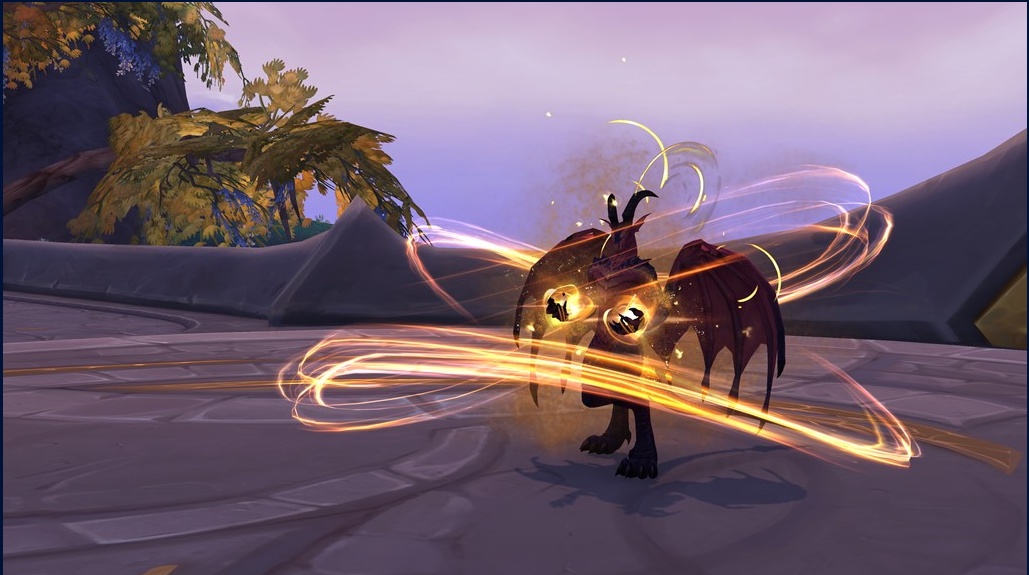
On the Midnight Patch 12.1 PTR, the latest change to Wingleader, a single Hero Talent in the Scalecommander tree, is perhaps one of the most consequential changes to Augmentation Evoker since the release of Midnight, and has massive implications for the spec's gameplay in both raid encounters and Mythic+.
For the uninitiated, allow me to quickly explain how Wingleader works in AoE on Live servers:
How does Wingleader work?
- Cast Fire Breath and Upheaval. Each cast generates a stack of Mass Eruption.
- Cast Mass Eruption at two different targets. This applies 6 seconds of Bombardments to each target. Every 2 seconds, each individual Bombardments debuff activates, each reducing the cooldown of Breath of Eons by 3 seconds.
- Cast Eruption as many times as possible. Every cast of Eruption triggers Extended Battle, extending all active Bombardments by 1 second, and reduces the cooldown of Upheaval with Accretion.
- Eventually cast Breath of Eons, which creates a new Duplicate, provides Fury of the Aspects from Plot the Future, and cheaper Eruptions from Imminent Destruction.
This gameplay loop is pivotal to how Scalecommander plays in AoE, and in terms of rotational goals, is second only to maintaining Ebon Might for as long as possible. With that in mind, let's take a look at this week's developers' notes, provide some additional context, and consider some of the biggest implications of these changes.
What makes gameplay "unintuitive"?
Developers' notes: Wingleader's cooldown reduction mechanic strongly incentivized spreading Bombardment applications across multiple targets. We feel that this gameplay is unintuitive in isolation, and additionally creates unhealthy behaviors such as Disintegrate clipping and Mass Disintegrate/Eruption pooling.
Spreading Bombardments onto multiple targets ultimately achieves two things: it accelerates the damage dealt from the Bombardments effect itself, and more importantly results in extra value through Extended Battle.
I've seen many strong reactions to the use of "unintuitive" in the developers' explanation; I'd like to tackle this point directly and highlight that "unintuitive" should not be confused with "counterintuitive." While tab-targeting to spread DoTs or other debuffs is not unique to Augmentation, consider a new player approaching the spec for the first time. They may correctly note that Bombardments does in fact stack its duration when applied to a single target, and very well may conclude that there's no reason to worry about losing value. It's also certainly not immediately obvious that Extended Battle extends all active Bombardments on all enemies. Simply put, until a player reads these various talents, pieces together these interactions, and has their own "Aha!" moment, I wouldn't expect this gameplay loop to come immediately or naturally. I think that's where this "unintuitive" idea comes from—you're not being asked to do something that doesn't make sense, it's just not something that you're likely to accidentally stumble upon as a new or inexperienced player.
More experienced players will begin to notice Fire Breath and Upheaval's cooldowns occasionally drift apart, and might try to avoid casting Eruption until two stacks of Mass Eruption are available in order to cast them together—this is the concept that we describe as resource "pooling". I actually believe this aspect of Augmentation gameplay is rather intuitive once you understand the underlying mechanics, but it definitely adds another small layer of complexity on top of the previously explained mechanics.
Where these interactions perhaps begins to cross the line into "unhealthy" territory is when we consider top-level Mythic+ gameplay in Midnight Season 1. Playing in a coordinated group, skilled Augmentation players can make use of the "downtime" where the tank is gathering packs of enemies to essentially begin collecting stacks of Mass Eruption before combat begins. Instead of two active Bombardments debuffs, players are now able to have three or even four Bombardments rolling on different enemies, each one extended by Extended Battle, and each one providing 3 seconds of Breath of Eons cooldown reduction each time they activate. We're now talking massive amounts of cooldown reduction allowing for multiple casts of Breath of Eons in a single pull, and this in turn causes a snowball effect as the Augmentation player spawns more Duplicates and has even more resources to spend. While this additional layer of gameplay undoubtedly separates the most skilled players from the rest of the pack, it's not entirely surprising that the development team was not in love with this particular element of skill expression, and decided that some form of change was warranted.
What is the goal of these changes?
This redesign is intended to retain the multitarget focus of the talent, while addressing those issues. We are increasing some of Scalecommander's sources of area damage to compensate for the lessened cooldown reduction the new Wingleader will provide, and will be keeping a close eye on Devastation and Augmentation's performance over the course of PTR to make additional adjustments as needed.
If the goal here is to simply reduce the value of spreading Bombardments across multiple targets, the compensation changes provided alongside this nerf are not sufficient to make up for the loss in cooldown reduction that the new Wingleader will provide.
How does this redesign work?
(Source article truncated — full details pending PTR notes update.)